Xiao meisha beach

Xiao meisha beach


Xiao meisha is one of the top ocean parks in the world, it gets a reputation of being the "Oriental Hawaii". It is the largest seaside resort in Shenzhen city, consisting of a vast white beach, a "Sea World" and water sports, accommodation, catering and shopping facilities.


The resort lies to the east of Dapeng Bay, about 30 kilometers from Shenzhen city center. Xiaomeisha is embraced by green mountains and surrounded by the chariming lush tropical forest. It looks like a crescent sand beach enchased in the sky and the water. The sand beach extends thousands of miles around the sea and the bathing place is clean and wide. 

There are excellent bathing place and a lot of entertaining items, such as the parachute-jumping on the sea, motorboats and submarines. The supporting services are from soup to nuts. Villas, restaurants, department stores, tents and barbecue could all be found inside the resort.


During summer weekend evenings, there are many wonderful performances "Night of Xiaomeisha" includes free performances of ethnic dancing, pop music, acrobatics and magic shows, etc.


Shenzhen Xiaomeisha Sea World lies in the opposite of the beach, where with the wonderful animal shows everyday, including seal, sea lion and dolphin performances.
Huang Feihong Kungfu Museum

Huang Feihong Kungfu Museum


Huang Feihong was a great Chinese kungfu master. Huang Feihong Kungfu Museum is located at his native residence, Luzhou village, at the foot of Mount Xiqiao of Nanhai, with a total area of 5.23 mu.


Huang Feihong has been a jianghu hero in the modern Chinese history, leaving behind
a lot of legendary stories. About 100 films have been made about his heroic deeds and over 40 Huang Feihong wushu coaching schools have been set up in the different parts of the world, teaching Chinese kungfu.


This Museum followed the architectural style of late Qing Dynasty,
presenting a distinctive construction pattern. Huang Feihong Shiyi Wushu Museum was built in 1996, with the aim to carry forward Huang Feihong's Wushu and medical ethics. The Museum is divided into Huang's native residence, screen and video room for displaying Huang's activities, Baozhilin Dispensary, acupuncture and Tuina room, orthopaedics clinic, herbal medicine clinic, Guan Dexing memorial hall.


The interesting entertainments include the statue booth of "ten Wushu masters of Guangdong province" and Huang Feihong Park as well as traditional performances such as kungfu, "dragon-playing" and "lion-playing" ,etc., which will be performed from 10:00 am to 4:00 pm every day. All these performances are attractive to many domestic and overseas tourists. Furthermore, there are Huang Feihong screen and video town, Huang Feihong Wushu school and Huang Feihong Wushu village.


About one hundred movies and teleplays concerning Huang Feihong have been filmed in Guangdong province, Hong Kong and Macao since half a century ago, of which 77 movies and teleplays acted and filmed by Guan Dexing, a late well-known actor of Hong Kong. Some of the well-known Chinese Wushu stars such as Li Lianjie and Zhao Wenzhuo, etc, have been Huang's image-builders for showing his elegant demeanor again. Huang Feihong is a revered Wushu master and famous both at home and abroad.
Splendid China

Splendid China


Splendid China is the largest miniature park in the world. The park's theme is reflects China's history, culture, art, ancient architecture, customs and habits
of 56 nationalities. There are more than 100 China's major tourist attractions have been miniaturized and laid out.

Splendid China is situated next to China Folk Culture Villages and the Window of the World and. It is a fun entertainment complex, where visitors can enjoy many China's top tourist attracions in three hours.

Some of the typical sites include Forbidden City, Great Wall of China, Imperial Palace, Temple of Confucius, the delicate gardens of Suzhou, etc. There are many sightseeing cars to transport visitors around the park, which provide convenience for the visitors.

The park is divided into Scenic Spot Area and Comprehensive Service Area, covers an area of 30 hectares. There are over 80 typical Chinese ancient buildings, natural landscapes and folk dwellings, whihch reflect 5000 years of the Chinese history and culture.

In the park, there is a traditional shopping street with an endless array of handicrafts and antiques, and there is a restaurant area offering traditional cuisine from throughout the country.

Shenzhen Nan'ao Bay

Shenzhen Nan'ao Bay


Shenzhen Nan'ao Bay is famous for its great variety of sea food, which is exceptionally fresh and tasty. It's an excellent place to sample some more unusual sea creatures! The sea here is teeming with rare sea animals such as abalone and sea urchin, etc.

Nan'ao town is a small fishing village with traditional local customs. The atmosphere is full of life and activity of the local residents. It is a pleasant district to wander and explore the beach, sample seafood, appreciate the unusual sea creatures. Visitors also can take a good view of some small islands near here by renting speed boat.

Most of the local residents make a living by the sea food. When twilight comes, they enjoy the most beautiful sunset and sing their fishing song on the seashore. In town, there are lots of seafood restaurants, where people can taste the delicious seafood dishes.

Shenzhen Maluan Mountain

Shenzhen Maluan Mountain


Maluan Mountain is a beautiful natural mountain in Shenzhen, it is very popular among avid hikers. The mountain is known as "easy, safe, beautiful and varied with clear streams, lush woods, Chinese plum blossoms ". There is a small village on Maluan Mountain where tourists can have an exciting adventure in the Chinese countryside.

It is a romantic mountain, it is said that many Shenzhen residents have fallen in love when climbing it. Expeditions to Maluan Mountain usually start at Diecuihu Reservoir, about 15 minutes from Xiaomeisha beach. The most attractive route is along a stream, the scenery is more beautiful and explorers can enjoy the nice cool water.


The stream is less than half-a-meter deep, with boulders forming natural steps for hikers. Jumping from one boulder to another is a real test of balance. Trekking up the stream is full of challenges and quite refreshing.
Much of the stream is under the tree, so you will fell cool even in the hottest summer. The sounds of water splashing add to the tranquility and coolness of the mountain.


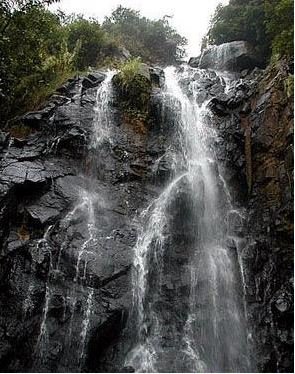
Maluan Waterfalls with 16 meters high and is one of the largest in the Shenzhen area, while there are also some smaller falls. Many leisurely hikers just enjoy watching the thundering waterfalls or bathing in the cool water, rock-climbers practice their skills on the cliffs beside the waterfalls.


Maluan mountain is well-known for its plum blossom trees, which bloom in January. The Plum Blossom Pavilion at the summit offers you a charming view. It is advisable for starting the expedition at about 10 AM, and you will arrive at the Plum Blossom Pavilion at noon. There is a samll villiage near here where you can take a relaxing lunch, it willl take you about 30 minutes to get there by walk. It is so interesting to buy some farm produces and cook in the locals houes.

 Travel tips
You had better to take some water and food with you. It is easy to get lost on Maluan Mountain because it has several peaks, so it is wise to bring a guide on your first visit.
Huanglong valley

Huanglong valley


The Huanglong Scenic and Historic Interest Area is located in Songpan County, in the northwest part of Sichuan Province and encompasses the Huanglong and Muni Valley. Huanglong's major scenery is concentrated in the 3.6-kilometer (2.2 miles) long Huanglong Valley that includes snow-clad peaks and the easternmost glaciers in China. Due to its layered calcium carbonated deposit patterns, the valley resembles a golden dragon winding its way through the virgin forest, stone mountains and glaciers. Along the valley are scattering numerous colorful ponds of different sizes and shapes, which are strewn with gold colored limestone deposit giving a shimmering golden hue to water, so in sunlight, a golden dragon seems to surge forth from the forest. Thus it was named 'Huanglong Valley' (Yellow Dragon Valley).
The 'World Wonder' and 'Fairy Land o­n Earth' are names enjoyed by the Huanglong Scenic and Historic Interest Area, which is well known for its colorful lakes, snow clad mountains, valleys and virgin forest.It was included in the UNESCO world heritage list in 1992.
The temperature of spring in Jiuzhaigou is low and changes frequently. The average temperature of January is 9 to 18 degree centigrade. The average temperature of summer is 19 to 22 degree centigrade but it is rain season in July and August, so the umbrella should be prepared. In the Autumn the weather is cool and dry and pleasant, but the difference in temperature between day and night is very huge. And the suitable time for travelling is the end of spring to the start of Autumn, and September and October are the best.

Highlight 
Upon entering the scenic area, a group of exquisite, crystal clear ponds will immediately catch your eyes with their unparalleled and esthetic charm. These are the Yingbin (welcoming guests) Colored Ponds.
Yingbin pond: It is composed by more than100 take the blue color as the main key pool of color, pool size notone, dissimilar in shape and form, the ravine stone diameter surroundsthe pool windingly to circle, welcomes the tourist the scenic area,also escorts to the tourist the scenic area deep place. Around thepool Ancient Tree is towering, All the flowers Struggles colorfully; The pool Dike Boundary ridge between fields like the jade,the agate cast, exquisitely carved. In the pond the clear water, deepblue passes green. The sunlight penetration tree crack according to o­nLake Surface, fluctuates yellow, is being green, the blue each kind of tone.The breeze has blown, in the pond exudes the intermittent coloredripples, especially clear colorful is moving, this then was the peoplepraised without cease "the Huanglong pool of color" the firstlandscape.
Mirror lake: In the rosy dawns, the lake is as smooth as a mirror and blue sky, white clouds, the mountains far away and trees nearby can all be seen reflected in the lake. What is more wonderful is that you can see the conjured images that the fish are swimming in the sky and the birds are flying in the lake! Near the lake there is a tree reaching the sky, which is tightly twisted by a long vine, just like two sweet lovers. Therefore, people gave Mirror Lake another romantic name, Love Park.
Five color pond: The old Chinese legend said that there was a colorful lake, Jasper Lake, in the palace of the Queen Mother of the West. However, nobody has seen it with his own eyes. The lake is 6.6 meters (about 21.7 feet) deep, 2,995 meters (about 9,826 feet) above the sea level and occupies an area of 5,645 square meters (about 6,751 square yards). o­n sunny days, the lake present various colors when the lake ripples, shining with red, orange, yellow, green, cyan, blue and purple light, as if you are in a dreamland.
Huanglong temple: The temple is the site for an annual temple fair held in summer.Built in the Ming Dynasty (1368-1644), the temple, which covers more than 1,000 square metres, is in a remarkable setting.  It stands at an altitude of 3,588 metres. Behind the roof-line of the second storey, mountain peaks frame a glorious view to the south. A statue of the eponymous monk is found inside the main hall.
In spring, the luxuriant trees, blooming flowers, butterflies and birdsong enhance their glamour even more. From the ponds, you can see the interwoven reflection of trees, mountains, clouds and sky, which is a veritable feast to the eyes. Along the valley, you will see many attractions including Feipuliuhui (glowing waterfall), Xishen (washing body) Cave, Penjing (miniascape) Ponds, Huanglong (Yellow Dragon) Temple, Huanglong (Yellow Dragon) Cave, Shitazhenhai and Zhuanhua (whirling flower) Pond, etc. In the Huanglong (Yellow Dragon) Cave, there are three sitting Buddha figures whose bodies are encrusted with calc-sinter crystals.
 In winter, ice forest, bamboo shoots and waterfalls, etc, form a magical icy scene. Shitazhenhai is the most beautiful attraction in Huanglong. The calcium carbonate deposits give a myriad of different hues to the water, which is truly breath-taking. Zhuanhua Pond is crystal clear and the spring water never stops welling up. If you throw flowers or leaves into the pond, they will swirl rhythmically with flow of the water.

Traffic 
Huanglong is 144 km away from Jiuzhaigou, you can go to Huanglong by bus from Jiuzhaigou at 6:30 to 7:30, and then return to Jiuzhaigou at 15:00. the ticket is 40 yuan.

Huanglong valley fee and opening hour Ticket : 200yuan per person in busy season, 60 yuan per person in low season. 
Hongyanguan ropeway 80 yuan per (up), 40 per person (down)
Opening Hour: unknown

Tips 
If you stand nearby the color pond to take a picture, it is very difficult to make grand feelings. The best way is to climb the hills near the pond, and photograph the ponds at the hill.
1.In order to prevent the sudden change of the temperature and rainfall, the Jiuzhaigou administrative bureau sep up 4 large screen broadcase the weather forecasts of Ruorilang waterfall, Long lake, Virgin forest and other scenic spots for the tourists at the striking places.
2. In the scenic area, the sunshine is stong ,so the ultraviolet rays are. Please wear a sun hat, embrocate the suntan oil to protect your skin.
3.There are many characteristic dining and flavor snacks in  Jiuzhaigou, and you can drink a little Tibetan barley liquor at noon.


China Folk Culture Village

China Folk Culture Village


China Folk Culture Village is mainly to represent the histories and mysteries of China's 56 ethnic groups, showing its diverse cuisines, folk customs, art and music, festivals and architectures.

It is a famous theme park in Shenzhen, recreated 24 China's ethnic villages. It located adjacent to Splend China and the Window of the World, both of them are the top tourist spots in China.

In this fun place, different festivals are celebrated throughout the year, such as the Spring Festival, the Water Splashing Festival of the Dai, the Torch Festival of the Yi, the Huaxia Great Cultural Temple Fair, the Shawm Festival of the Miao, the Xinjiang Cultural Festival, and the Inner Mongolia Grassland Cultural Festival.

Every day, there are many interesting culture performances, and there is a huge folk song and dance party in every enening !

In the village, there are also some beautiful replicas of China's scenic spots, including the stone forest from Yunnan and the coconut forest from Hainan etc. You can choose to walk around the villages, cycle or take a boat trip
Window of the World

Window of the World

Window of the world is one of the most famous theme park in Shenzhen, and it is one of the largest theme park in China, which focus about 130 most famous landmarks and attractions from all over the world.


Located in the Overseas Chinese Town, it close to Splendid China and the China Folk Culture Village. This fun place is a collection of famous world sites in miniature and covers an area of 480,000 square kilometers.

 Famous world's sites

There park contains about 130 miniature replicas of famous landmarks and attractions from all over the world, such as the Pyramids of Egypt, the Amon Temple of Karnak, the Angkor Wat of Cambodia, the Grand Canyon of America, L'Arc de Triomphe of Paris, St. Peter's Cathedral of the Vatican City, the Taj Mahal of India, the Sydney Opera House of Australia, and the Leaning Tower of Pisa and much much more!

Some large-sized spectacular attractions are also available like the 108-meter-tall replica of the Eiffel Tower. Reach to its top, you can take in the beautiful scenery of Shenzhen and Hong Kong. The view of the active Hawaii Volcanoes, and intriguing scene of glowing rocks with surging molten lava, and the fountains will really fascinate you.

 Colorful world's festivals

There are many colorful festivals from all over the world are celebrated here throughout the year, for example Christmas, the International Beer Festival, pop music performances during China's National day, etc. In the evening, tourists can enjoy "Fervorous Paris Nights" at "Caesar's Palace". Spectacles include young bikini-clad women prancing on stage to the music of Tom Jones' "Sex Bomb".

 Well-known restaurants and bars

There are different well-known restaurants and bars lies on the International Street, where tourists can sample food and drink from France, Germany, Italy, Austria, Russia, Japan, Thailand, and Korea. There are also some souvenir shops lies here, selling all kinds of souvenirs.
Forbidden City (Palace Museum)

Forbidden City (Palace Museum)


Lying at the center of Beijing, the Forbidden City, called Gu Gong in Chinese, was the imperial palace during the Ming and Qing dynasties. Now known as the Palace Museum, it is to the north of Tiananmen square. Rectangular in shape, it is the world's largest palace complex and covers 74 hectares. Surrounded by a six meter deep moat and a ten meter high wall are 9,999 rooms. The wall has a gate on each side. Opposite the Tiananmen Gate, to the north is the Gate of Divine Might (Shenwumen), which faces Jingshan Park. The distance between these two gates is 960 meters, while the distance between the gates in the east and west walls is 750 meters. There are unique and delicately structured towers on each of the four corners of the curtain wall. These afford views over both the palace and the city outside. 

The Forbidden City is divided into two parts. The southern section, or the Outer Court was where the emperor exercised his supreme power over the nation. The northern section, or the Inner Court was where he lived with his royal family. Until 1924 when the last emperor of China was driven from the Inner Court, fourteen emperors of the Ming dynasty and ten emperors of the Qing dynasty had reigned here. Having been the imperial palace for some five centuries, it houses numerous rare treasures and curiosities. Listed by UNESCO as a World Cultural Heritage Site in 1987, the Palace Museum is now one of the most popular tourist attractions world-wide.


Construction of the palace complex began in 1407, the 5th year of the Yongle reign of the third emperor of the Ming dynasty. It was completed fourteen years later in 1420. It was said that a million workers including one hundred thousand artisans were driven into the  long-term hard labor. Stone needed was quarried from Fangshan, a suburb of Beijing. It was said a well was dug every fifty meters along the road in order to pour water onto the road in winter to slide huge stones on ice into the city. Huge amounts of timber and other materials were freighted from faraway provinces.

Ancient Chinese people displayed their very considerable skills in building the Forbidden City. Take the grand red city wall for example. It has an 8.6 meters wide base reducing to 6.66 meters wide at the top. The angular shape of the wall totally frustrates attempts to climb it. The bricks were made from white lime and glutinous rice while the cement is made from glutinous rice and egg whites. These incredible materials make the wall extraordinarily strong.

Since yellow is the symbol of the royal family, it is the dominant color in the Forbidden City. Roofs are built with yellow glazed tiles; decorations in the palace are painted yellow; even the bricks on the ground are made yellow by a special process. However, there is one exception. Wenyuange, the royal library, has a black roof. The reason is that it was believed black represented water then and could extinguish fire.

Nowadays, the Forbidden City, or the Palace Museum is open to tourists from home and abroad. Splendid painted decoration on these royal architectural wonders, the grand and deluxe halls, with their surprisingly magnificent treasures will certainly satisfy 'modern civilians'.

Flat Stanley Climbs the Wall

Flat Stanley Climbs the Wall

Have any of you ever heard of Flat Stanley? Me neither. Until a little while ago. Mr. Lovely's very lovely niece is doing a project in school where you have to draw a person (aka Stanley), color him in and then send him to your relatives and friends. Then they take him somewhere, Disneyland or the Golden Gate Bridge, and take a photo of him living it up in said place.

We took Stanley to the Great Wall. He complained about the cold and the 4 mile hike the entire time, but he was still smiling in all the photos! Of course we had to go with him. I mean, I didn't really want to go, but since Stanley was insisting, I finally gave in. We went to a town called Jinshanling and hiked 6 km (roughly 4 miles) to the town of Simatai along the wall. It was about 15 degrees and windy, although it was sunny so it wasn't too bad. This is a great way to see a lot of the wall, instead of just getting dropped at one town and going to the wall, taking photos and leaving. You really get a nice feel for the wall. It was great, no pun intended!!!


So, did you know the wall is actually 8800 km (about 5000 miles) long? That's pretty long. So we only covered a fraction of a percentage of it! Several walls have been built since the 5th century BC that are referred to collectively as the Great Wall, which has been rebuilt and maintained from the 5th century BC through the 16th century. One of the most famous is the wall built between 220–206 BC by the first Emperor of China, Qin Shi Huang. Little of that wall remains; the majority of the existing wall was built during the Ming Dynasty.

Okay so that concludes my history portion. The dynasties of China are confusing enough!

PS Just for fun I googled "flat stanley" and there is a website!! haha. You can read more about it HERE. I am SOOOO out of the loop!
Notes On China

Notes On China

I am going to have to do a few China recaps, since I couldn't get onto blogger, I didnt really post too much. However, today I am short of time, so I will leave you with a few random facts about China.

- % of population under the poverty line (US$1/day) in 1979: 64%

-% of population under the poverty line in 2007: 10%

-Average annual income in Shanghai 2007: US$3090

- Average annual income in urban areas 2007: $1819

- Average annual income in rural areas 2007: $545

And my favorite:

Number of fingers lost in factory accidents in the Pearl River Delta in 2004: 40,000
Kung Fu Fighting

Kung Fu Fighting

Have you ever taken the subway in a big city? Have you done it during rush hour? With your next 6 months worth of clothing on your back? We usually try to avoid the subways during rush hour times and sometimes if we do have our luggage, we will walk or even spring for a cab rather than bashing people with our items.

However, when you live in a country with approximately 1.5 billion people, you get bumped around no matter what. The subways are always full; people are rushing on and off and up and down the stairs. It is quite a sight. But the best was today, when we HAD to ride during rush hour. We were smashed into the car (luckily without bags!) with about oh, maybe 1.4 billion other people. You can't move or hold on to anything; you just hope that if the train stops the other 1.39 billion people will hold you up.

This has happened to me before. In San Francisco coming home on the MUNI after a Giants game is a pretty tight squeeze. I have ridden a non-air conditioned packed full (smelly) subway in Paris. In Japan, they have an attendant with a cattle prod who keeps pushing more and more (and more!) people into the train. However, I think China tops them all. Not only were we smashed in so tightly, but if someone in the middle wants to get out they just squirm their way to the edge. Even better was something else I saw today; it was basically a mosh pit of subway riders. When the train stopped, people were trying to run off the train; others were trying to run on…It was like they were fighting. Everyone was shifting and leaning and pushing and jumping and swaying and GWWWWARRRR! I felt like body slamming someone. Everyone else seemed to be having fun doing it.

As funny as this is when you are only doing it once in a while, the sheer excess of people in China has also caused us a little problem. February 3rd is Chinese New Year. That and the (basically) two week period before that are called the Spring Festival. This means: starting Wednesday the 19th and going until February 3rd, people are on vacation. Kids are out of school; people in the cities go home to visit their families; EVERYONE travels somewhere. What does this mean for us? This means we cannot get a train, bus, boat OR car out of Beijing. It's like a bad movie.

Our plan was to go from Beijing south, eventually ending up in Macau, where we would celebrate the New Year and then go to Vietnam. CHANGE IN PLANS!!! We can't get out. Even if we do get out somehow, we won't be able to go anywhere from there. So we have decided to, unfortunately, leave China early. Bangkok (and about a 70 degree raise in temperature) here we come!!! Instead of heading south from China to Vietnam, we will head north from Thailand to Vietnam. Crisis (and cold weather) averted. Phew.

Have you ever been stuck somewhere? Was it because of weather…or…? Did it ruin your trip? Are you a calm traveler or do you freak out in situations like this?

Summer Palace in Winter

Summer Palace in Winter

Near Beijing, there is a palace that the royals used to use in the summertime. it is called the Summer Palace.  It gets really hot in the summertime in the city, so they enlarged Kunming lake and built a palace on the hill next to it, where they went to swim and relax. Today we went to see this marvelous place. However, as you may be aware, it is not summertime (in fact, it's downright freezing here!) You may think this may make it worse, but it actually is a sight to be seen. The entire lake is frozen over, along with all of the little channels that run through the property. People ice skate and sled on the ice.

The architecture is gorgeous. The roofs are all hip and gable and have jade statues of dragons and different sorts of other animals on the peaks. There are arched stone bridges across the channels. The interiors of the buildings are all carved woodwork, meticulously painted. The palace sits on a hill where you can see for miles and has a great view of the frozen lake with all the little skaters on it.

However, even though all of this was great, my favorite (or maybe the thing that amused me the most) was the names of things. Here are a few examples. See if you can guess what kind of structure these are.

The Realm of Multitudinous Fragrance: If your answer was "a stone and brick archway", you are right! Apparently it was thought that it resembled the holy land of the Buddha, hence the name.

Hall of Dispelling Clouds: Yup, it's a hall. It was built to celebrate the Empress' birthday.

Garden of Harmonious Interests: Yup, it's a garden. I guess you can't go there with anyone you don't agree with? P.S. Mr. Lovely and I did not go there.

Okay the last two weren't that difficult. But isn't that fun? Don't you want to visit those places? Doesn't it seem like nothing but good could come to you here? Have you read Anne of Green Gables? Don't those names sound like something she would make up? There are also names such as The Hall of Benevolence and Longevity, The Hill of Longevity, The Temple of the Sea of Wisdom and many more.

I guess what I am trying to say is, even if you come to Beijing in the winter time, don't let the name fool you; the Summer Palace is just as fun in the wintertime!!

What is your favorite place to go in the summer/winter? What is your favorite fun(ny) name of a place near you? (P.S. Near my parents' house are the towns of Cool, CA and Maybe, CA.)
Blocked! and other China randoms

Blocked! and other China randoms

- Not only is Blogger blocked in China, but also these sites as well: Facebook, Goodreads, Wordpress. I am sure there are many more; I won't find out until I try to use them. At least Flickr works.

- The number one MUST HAVE item in China -- a shiny poofy jacket with a fur lined hood. Everyone, and I mean EVERYONE has one. Old, young, boys, girls and everything in between. EVERYONE has one. Except me. THIS is a good example of what I am talking about. Are people wearing these at home? I am so behind in the fashion world.

- I am happy to report that ALL BOOTS are now in style. I have seen short ones, tall ones, brown, black, slipper style, high heel, low heel, no heel, furry, pointed, round, square....etc. No matter your boot style, all is good!! Now would be a good time to stock up on all of your favorites. Maybe I need a bigger backpack. Or a Chinese Lady Bag. I guess I am in the right place for that.

- Best thing about China? Meat on sticks. Pork buns on the street. Dumplings on the street. So I guess what I mean to say is...street food. For about a dollar, you can get 2 chicken on a stick, 6 pork bun or 6 dumpling. I have eaten about 100 of each already.

- NOT cheap? Coffee!!!! Darn it. I tried to live without it for a few days and had a huge headache. So, I am living on Nescafe instant coffee for now (and supplementing with a treat of a mocha from time to time)

- A couple of Chinese words (and totally butchered spelling I am sure) I have learned: Thank you = Xiexie (pronounced shay-shay), Hello = ni how

- Price of a beer = .50 cents
- Price of a Starbucks coffee = $4.50
- Price of a clean room, with heat and a hot shower = $12
- Price of a clean room, without heat and who knows if the shower was hot because I wasn't about to try it = $7
- Price of a sleeper bed on a train from Shanghai to Beijing (~650 miles) = $50

That's it for now! I am still emailing posts in and am going to try to hopefully have a couple pictures included here! Please let me know if they don't show up! The round door is in Little Likeng, Wuyuan Province. The tower is the Oriental Pearl in Shanghai.
El Willy Food Review

El Willy Food Review

When we are traveling, we generally eat a lot of top ramen. For less than 50 cents a meal, or $1.50 a day, this is how we can afford to travel. Seriously. By saving on food, we gain an extra day  here or there to do the things we want to do. SO… top ramen is my friend.

However, once every blue moon we like to go out for a "real shebang" and eat at a nice restaurant, if one is available. January's pick of the month was El Willy, in Shanghai. El Willy is a tapas joint and we saw it on the ONE English channel in China that we get, CCTV. We decided to see if it was any good.

By the way, if any of these are spelled wrong, its because this computer doesn't know any Spanish or Italian, and I am not good at spelling. I apologize in advance.

What we ordered:
Pickled anchovies
Octopus with Iberian Ham and garlic aioli (photo at bottom)
Crispy suckling pig, cooked 12 hours
Seared Fois Gras
Pork Loin with arugula and parmesan
Layered Fois Gras pate with croustini

Our Ratings, out of 10:  (*=Mr Lovely, & = me)

Food Quality and Taste: *9, &8 (great food, some dishes were small)
Ambiance: *9, &9 (very open space, warm and friendly)
Service: *7, &8 (waiter was very nice, coffee and wine were a little slow to arrive)
Price: *7, &6 (it was a little too expensive for the size of the plate)
Location: *6, &6m (could walk easily to restaurant, however, it had no view whatsoever)

Total: 75  Average = 7.5/10

I would recommend this place to anyone if they are ever in Shanghai and want a nice Spanish meal. My favorite dish sways between the crispy pork and the first fois gras dish. However, if you are looking for a water view, this is not the place for you. If you want huge portions, this is also not where you should go. Stick with the traditional Chinese, family style portions. Mr Lovely had to get a hamburger after eating here.

Please let me know, as I am emailing due to blogger issues: Is there a picture below? Are there any links? I have no idea if anything is working and will be in China with problems for another few weeks.

The photo below should be of the Iberian ham wrapped Octopus. Yum! Hopefully the photo, if it is there, is not super huge.


Big Trouble in Little China

Big Trouble in Little China

If you ever wondered, and I know you did, why I am not blogging so much lately, I will tell you why.

Did you know that in China they DO NOT LIKE BLOGGER. In fact, they block it. You cannot get on any blogspot sites (sorry guys, but I am still checking you out in Reader); you cannot get onto blogger.com to post your blogs. So, I am going to try to post by email; hopefully the formatting isn't totally messed up because I have had that experience before when emailing. We shall see. The saddest part is that I can't even access my blog to make sure it posted okay and I can't access anyone else's to comment!!!! This sucks.

I guess you can help me. Is my format messed up? Do you know how to get around the blogger ban in China? I am sorry I am not commenting on anyone's posts!!


Besides that, being in China is interesting. First of all, barely anything is in English; barely anyone speaks English. We always pretty much do all our travel on our own; we don't use tours. Here it is a little bit difficult. You should have seen us when we first arrived at the Guangzhou train station and ALL THE INFORMATION was in Chinese. With kanji (Chinese characters), NOT Latin letters. To top it off, it is almost Chinese New Years, so we arrived and there were 17 mile lines at all the ticket booths. We sat and scratched our heads for a while, let me tell you.  We are using a lot of pointing, sign language and nodding etc.

We finally figured it out, paid too much for our train ticket, and were on our way. Next we wanted to do a tour of an area where there were a lot of little towns and ancient architecture. We got our tour, complete with an overpriced driver who didn't speak ANY English! Its been an interesting adventure! Ordering food is a lot of grunting and pointing at pictures, if there are any. Luckily I know how to say Chow Mien (fried noodles) so that is my fall back plan. Hopefully I don't hurt myself, because asking for the hospital would be downright impossible.

To top it off, it is winter. I mean, snowing and freezing cold winter. Many of the places where we, gung ho as we were, thought we would "go hiking", are frozen solid. You can't get in or out and the locals don't have any water or electricity. But it is beautiful all the same. We are in Shanghai now, more on that later, and heading for Beijing in a few days, more on that later as well.

I hope it is warmer where you are than it is here! Please let me know if anyone has any tech savvy Chinese blogger evasion tips!!!

I am attempting to post a photo below. Please let me know if there isn't one!!! It is Shanghai at night.


Yinlianzhui Waterfall, the mellowest waterfall in China

Yinlianzhui Waterfall, the mellowest waterfall in China

The Yinlianzhui Waterfall is located in Tianxingqiao scenic area, seven kilometers away from Huangguoshu Waterfall in Guizhou Province. The Tainxingqiao scenic area, which is named after a natural rock bridge in its area, is a natural park boasting plants of various types and grotesque rocks. When the waterfall flows through the rocks slowly and softly, it looks like many pieces of white chains hanging from the mountain, the elegant posture has helped it to own the name of "The softest waterfall in China." 
Big Wild Goose Pagoda  - Xian, China

Big Wild Goose Pagoda - Xian, China


Overview
The Big Wild Goose Pagoda is an ancient building that was built during the Tang Dynasty Period in Chang'an, which is presently known as Xi'an. This pagoda is well-preserved and is considered a holy place for Buddhists. There are millions of visitors to the Big Wild Goose Pagoda in Xian each year, both Buddhists and tourists alike. This structure is rated as a National Cultural Relic Preserve and also as an AAAA Tourist Attraction. Those who are tourists to this area should make sure that they visit the Big Wild Goose Pagoda as well as the other two structures that are associated, which are the Da Ci'en Temple and the North Square of the Big Wild Goose Pagoda.

History
The Big Wild Goose Pagoda was built in the year of 652 A.D. during the rule of the Chinese Emperor Gaozong of the Tang Dynasty. In ancient times, this structure functioned to collect Buddhist materials taken from India by hierarch Xuanzang. When the Big Wild Goose Pagoda was originally constructed, it was sixty meters tall and included five stores.

The modern pagoda is now nearly five meters taller than it once was with an additional two stories. From the outside, this building looks squarish and cone-like, a structure type that is simple, but amazing all the same. The Big Wild Goose Pagoda can be considered a masterpiece of Buddhist construction style. The pagoda was built with brick, which can help to explain why it is one of the most well preserved ancient buildings in the world. Once inside this pagoda, you will find a staircase that will lead to an overlook in which you can see much of Xi'an city. Statues of Buddha are finely engraved on the walls throughout this structure. These engravings were done by the famous artist Yan Liben, who was part of the Tang Dynasty.

Legend
The name of this pagoda also comes from ancient times, of course. Stories of Buddhists tell that there is a legend behind the name 'Big Wild Goose Pagoda'. At one point, there were two branches of Buddhists and in one branch, eating meat was not a concern. A time came when the Buddhists who did not find it taboo to eat meat could not find any meat for consumption. After searching for meat for their dinners and having no luck, these Buddhists saw a group of big wild geese flying by them. As the Buddhists were watching the geese fly over, one had silently prayed to the Bodhisattva to be merciful and allow them to have meat for their dinner. At the moment this prayer was finished, the leading goose of the flock broke his wings and fell to the ground. The Buddhists who were witness to this saw it as a sign from the Bodhisattva to be more pious. These Buddhists then built the Big Wild Goose Pagoda at the site of the fallen goose.
The history behind this landmark structure is one of great interest to Buddhists and others as well. If you find yourself visiting the great city of Xi'an, you should not miss the opportunity to view this ancient structure. You will find that is nothing less than breathtaking, even in its simplicity.

Tips
1. There is a daily music fountain show at the North Square of the Big Pagoda which is the largest in Asia. In generally runs every 2 hours from 12.00pm though times do vary according to season. Its free
2. Entrance to the Pagoda itself is from the Southern Square
3. There is a plethora of quality restaurants at both the South and West squares.
4. The Pagoda is part of the new Qujiang Culture district and is nearby the both the Shaanxi History Museum and Tang Paradise
5. It is located south of Xian City and will cost around 15-20rmb in a taxi depending on traffic