CYPRUS' HEALTH MINISTER URGES FOR DISCIPLINE TO PREVENT PANDEMIC SURGE

CYPRUS' HEALTH MINISTER URGES FOR DISCIPLINE TO PREVENT PANDEMIC SURGE

 in-cyprus 30 September 2020 - by Maria Bitar


Cyprus’ Health Minister Constantinos Ioannou has said that the discipline and resolve the Cypriot people have proven they have in implementing measures and protocols are the best weapons in our disposal to prevent a surge of the COVID-19 pandemic.

In an address, delivered on his behalf by Dr Giorgos Charalambous at the 6th annual conference on public health, organised by Cyprus University of Technology’s (CUT) International Institute on Environmental and Public Health, which took place online on Tuesday, Ioannou spoke of the steps taken and measures in place to prevent the pandemic in Cyprus.

Following the peak of the pandemic last April, he noted, Cyprus managed to push through with the least possible losses having shown great persistence and patience.

“Today the epidemiological picture presents positive elements despite surges of cases at times”, he said, adding that developments are volatile around the world.

Excessive laxness and complacency can lead us to derail from our goal, he stressed and spoke of the importance of the “engagement of society in this great fight”.

“The discipline we have proven that we have as a people and the responsibility in implementing measures and protocols are the weapons in our disposal right now to prevent a great surge of cases which could likely have uncontrollable consequences”, the Minister noted.

Addressing the conference on behalf of ECDC Dr Agoritsa Baka spoke of the pan-European plan to tackle the pandemic.

Referring to Cyprus she said that there is a steadily small percentage of positive COVID-19 cases, adding however that in contrast with March and April now the people infected belong to a younger age group (20-40).

Georgios Nikolopoulos, Visiting Assistant Professor at the University of Cyprus’ Medical School, outlined the epidemiological health data collected in the country, adding that Cyprus maybe does the most tests in the world, on a population ratio daily amounting to about 2,000–3,000.

On her part Fofi Constantinidou, Professor of the Psychology Department at the University of Cyprus presented the findings of a survey conducted during lockdown according to which one in four adults in Cyprus, approximately 23%, had high levels of stress compared to other times, when the percentage ranged between 1 -4%.

At the same time, 67% of people who took part in the survey said that their quality of life changed a lot during lockdown.

(CNA)

COVID SET TO RISE THIS WEEK IN CYPRUS, WARNS CONTACT TRACING TEAM

COVID SET TO RISE THIS WEEK IN CYPRUS, WARNS CONTACT TRACING TEAM

 in-cyprus 30 September 2020 - by Constantinos Tsintas


The contact tracing team has warned that new coronavirus cases will be rising over the next few days in Cyprus, as people with confirmed infections do not state their close contacts, leading to the spread of the virus.

Epidemiologist Valentinos Silvestros, member of the contact tracing unit, told CNA that the team has a great number of contacts to deal with from the family, professional and social activity of every individual that is confirmed as positive.

Silvestros said that additional cases will emerge from active clusters, while certain of the cases contacts have already reported symptoms.

He added that some of the people infected spread the virus far more easily than others, depending on sociability too.

As people move freely, he added, contacts from confirmed cases have multiplied.

A CHRISTMAS CAROL - Stage One Theatre, Emba - 26-28 November and 3-5 December

A CHRISTMAS CAROL - Stage One Theatre, Emba - 26-28 November and 3-5 December


A CHRISTMAS CAROL - A seasonal burlesque
Written and Directed By: Doug Craig

Stage One Theatre, Emba


26th - 28th NOVEMBER and 3rd - 5th DECEMBER 2020, Curtain Up 7.30pm  


The telephone line 99967737 will open from Monday 2 November between 10am and 1pm Monday to Friday. The box office at the theatre will also be open from the same date, but, unlike the telephone line, is only open TWO days a week -   Mondays AND Fridays from 10am till 12 midday  -  to reserve or collect your tickets.

Tickets €12 and €6 for children.

THIRTY NEW CASES TODAY, TUESDAY, 13 VIA TRACING

THIRTY NEW CASES TODAY, TUESDAY, 13 VIA TRACING

 Filenews 29 September 2020


The Ministry of Health informs that, according to an update received today by the Epidemiological Surveillance Unit from contracting laboratories, a total of 2,685 laboratory diagnoses identified 30 new cases of COVID-19 disease.

In detail, virus-positive individuals emerged as follows:

  • Of 623 samples taken through a private initiative, 9 cases were identified.
  • Of 212 samples taken through the process of tracing contacts of already confirmed cases, 13 cases were identified.
  • Of 496 samples taken as part of the laboratory sample of 3,000 people in Larnaca Province, 6 cases were detected.
  • Of 1,087 samples taken as part of the passenger and repatriated screening, 2 cases were identified.

In addition, the following laboratory tests were carried out, without the detection of a case:

  • From samples taken under the programme of referrals from Personal Physicians and special team control through the Public Health Clinics, 96 laboratory tests were completed,
  • From samples taken from the Microbiological Laboratories of the General Hospitals, 129 laboratory tests were carried out, and
  • Samples taken as part of the control programme for pupils, teachers and school staff completed 42 laboratory diagnoses.

Therefore, and on the basis of the data so far, the total number of cases amounts to 1,743.

In addition, a total of 16 people tested positive for the SARS-CoV-2 virus are being treated at Famagusta General Hospital, four of them in the Increased Care Unit.

Source: Eyenews

UK INTELLIGENCE DATA 'WOULD BE DELETED' IN EVENT OF NO-DEAL BREXIT

UK INTELLIGENCE DATA 'WOULD BE DELETED' IN EVENT OF NO-DEAL BREXIT

 The Guardian 29 September 2020 - by Dan Sabbagh Defence and security editor

© AFP via Getty Images People are evacuated near the Bataclan concert hall in Paris in 2015. Sir Julian King has warned that the UK could lose direct access to EU security databases, which would ‘immediately impact’ the fight against terrorism and serious crime across Europe.

British intelligence about terrorists and other serious criminals would have to be deleted from EU systems if the Brexit trade negotiations were to collapse, a former EU security commissioner has warned.

Sir Julian King, who was the UK’s last commissioner in Brussels until last year, said that in security terms “the difference between a deal and no deal is significant” and the negative impact would be felt immediately.

“UK [intelligence] data that was held in EU systems could – indeed would – be deleted, if there was no data adequacy arrangement covering how you share data,” said the former British diplomat in a briefing organised by the Royal United Services Institute.

The UK would instantly become disconnected from a range of databases and systems such as the European Criminal Records Information Services, which shares data about prior convictions across all EU countries, he added.

Warnings about the UK losing direct access to EU security databases in the event of no deal have been made previously, but King’s remarks about deletion represent a little discussed risk. It would have an “immediate impact” fighting terrorism and serious crime across Europe, he said.

The Brexit talks have entered a critical phase with UK and EU negotiators currently determining whether they can enter the “tunnel” – the final, critical phase of high-level negotiations, which is conducted in absolute secrecy.

Both sides are hoping to reach a final agreement prior to the EU council in the middle of October, for a deal that would spell out what the UK’s trading relationship with the 27 country bloc would be when the transition period concludes at the end of the year.

Sir John Scarlett, a former boss of MI6, said data sharing between the UK and the EU and its member states had grown significantly in recent years and that it was critical in tackling terrorism and drug trafficking.

The former spy chief said that “after the attacks in the Bataclan in Paris in 2015” intelligence sharing about the attackers and their ringleader were critical to investigators scrambling to piece together information about the planning of the attack.

Investigators in both the UK and across Europe needed to track “personal movements, crossing frontiers, knowing where people are at any one time,” and “financial movements at the same time,” Scarlett added.

“The jihadist extremist threat is absolutely definitely still there,” Scarlett said. “Last year in the EU there were 21 terrorist related attacks of which three succeeded”. One was the knife attack at Fishmonger’s Hall in London Bridge, where two people who had been attending a conference on prison rehabilitation were killed.

Britain would also have failed to have negotiated a replacement for the European arrest warrant in the event of a no deal, Scarlett warned. “Operationally, it really matters … the ability to arrest serious criminal suspects in the UK, or elsewhere across the EU,” the MI6 boss said.

King said that he thought the prospects for a security deal – not generally thought to be a topic of controversy – were inextricably bound up with the overall negotiations, where there are sticking points about state aid and checks on goods between Great Britain and Northern Ireland. “This is not an area where they [the EU] are envisaging separate arrangements,” King said.

BREXIT - WARNING FOR CARE SECTOR IN PANDEMIC AS FREEDOM OF MOVEMENT ENDS

BREXIT - WARNING FOR CARE SECTOR IN PANDEMIC AS FREEDOM OF MOVEMENT ENDS

 The Guardian 29 September 2020 - by Jamie Grierson Home affairs correspondent

© Provided by The Guardian Photograph: Andrew Milligan/PA

The end of freedom of movement will increase pressure on the social care sector in the midst of a pandemic unless ministers make jobs more attractive to UK workers by increasing salaries, government advisers have warned.

The Migration Advisory Committee (Mac) has warned of the “stark consequences” of low wages in social care with most frontline role ineligible for the post-Brexit skilled worker immigration route or on the official list for job shortages in the UK.

Senior care workers and nursing assistants are among healthcare roles that can be added to the shortage occupation list (SOL) to relieve pressure when freedom of movements ends on 1 January, the committee said in a report.

But many of the roles in social care do not qualify and the advisers said “it therefore remains crucial that the government implements a more sustainable and generous funding model”.

“The risks of this not happening in a timely manner are stark,” the report reads. “If that does not occur, or occurs with substantial delay, we would expect the end of freedom of movement to increase the pressure on the social care sector, something that would be particularly difficult to understand at a time when so many care occupations are central to the Covid-19 pandemic frontline response.”

a group of people looking at a cell phone: Care home staff during the clap for carers initiative in May.© Photograph: Andrew Milligan/PA Care home staff during the clap for carers initiative in May.

NEW DECREE OF THE MINISTER OF HEALTH FOR FOOTBALL TEAMS

NEW DECREE OF THE MINISTER OF HEALTH FOR FOOTBALL TEAMS

 Cyprus Mail 29 September 2020 - by Jonathan Shkurko


The health ministry on Tuesday made an amendment to the protocol in place for football games, implemented to cope with the ongoing Covid-19 pandemic.

Starting from Tuesday, teams coming to play European games in Cyprus will have to submit a list containing the names of all passengers travelling on their flight, including players, coaches and other members of the staff, to the relevant authorities

Moreover, everyone on the flight will have to present a negative PCR test on arrival to the island.

The new rule does not affect Greek side Olympiacos, who will face Omonia Nicosia in the second leg of their Champions League playoff tie, taking place at thr GSP Stadium on Tuesday night, since the team arrived in Cyprus on Monday.


PLASTIC-EATING SUPER ENZYME MAY BE THE KEY TO BEATING POLLUTION

PLASTIC-EATING SUPER ENZYME MAY BE THE KEY TO BEATING POLLUTION

 The Telegraph 29 September 2020 - by Telegraph reporters

© Reuters The enhanced protein comprises two enzymes produced by a type of bacterium that feeds on plastic bottles - Reuters

A so-called super-enzyme that eats plastic could be a leap forward in finding ways to tackle the pollution crisis, scientists have said.

The enhanced protein comprises two enzymes produced by a type of bacterium that feeds on plastic bottles, known as Ideonella sakaiensis.

Prof John McGeehan, the director of the Centre for Enzyme Innovation at Portsmouth university, said that unlike natural degradation, which can take hundreds of years, the super-enzyme can convert plastic back to its original materials, or building blocks, in just a few days.

He told the PA news agency: "Currently, we get those building blocks from fossil resources such as oil and gas, which is really unsustainable. But if we can add enzymes to the waste plastic, we can start to break it down in a matter of days."

The process would allow plastics to be "made and reused endlessly, reducing our reliance on fossil resources", he added.

In 2018, Prof McGeehan and his team accidentally discovered an engineered version of one enzyme, PETase, was able to break down plastic in days.

For their study, published in the journal Proceedings of the National Academy of Sciences, the professor and his team mixed PETase with the second enzyme, MHETase, and found "the digestion of the plastic bottles literally doubled".

Prof McGeehan, one of the study authors, said: "This allowed us to create a super-enzyme six times faster than the original PETase enzyme alone.

"This is quite a significant leap forwards because the plastic that ends up in our oceans today is going to take hundreds of years to break down naturally. Eventually, through sunlight and wave action, it will start to break down into smaller and smaller pieces - and we will end up with microplastics - a serious problem for the organisms that live in the environment."

Tests showed that this super-enzyme was able to break down a type of plastic used in soft drinks and fruit juice packaging, known as PET (polyethylene terephthalate).

Although it is said to be highly recyclable, discarded PET persists for hundreds of years in the environment before it degrades. Aside from PET, the super-enzyme also works on PEF (polyethylene furanoate), a sugar-based bioplastic used in the manufacture of beer bottles. Prof McGeehan added, however, that the super-enzyme was not able to break down other types of plastic.

For the next part of their studies, the researchers will look at ways to further accelerate the breaking-down process, so that the technology can be adapted for commercial purposes.

Prof McGeehan said: "The faster we can make the enzymes, the quicker we can break down the plastic, and the more commercially viable it will be."

RUSSIAN SCIENTIST BEHIND COVID-19 VACCINE DEFENDS 'WARTIME' ROLL OUT

RUSSIAN SCIENTIST BEHIND COVID-19 VACCINE DEFENDS 'WARTIME' ROLL OUT

 in-cyprus 29 September 2020 - by Maria  Bitar


Russia plans to share preliminary results of its COVID-19 vaccine trial based on the first six weeks of monitoring participants, raising the tempo in an already frenzied global race to end the pandemic.

Alexander Gintsburg (pictured), head of the Gamaleya Institute that produced the Sputnik V vaccine, told Reuters that the pace of its development was necessary under the “wartime” conditions of a pandemic but no corners were being cut.

Russia has pushed ahead with its potential COVID-19 vaccine at top speed with mass public vaccinations alongside the main human trial, raising concerns among some observers that it was prioritising national prestige over solid science and safety.

“People are dying just like during a war”, said Gintsburg, holding a crystal model of a coronavirus in his hand. “But this fast-tracked pace is not synonymous, as some media have suggested, with corners being cut. No way.”

Sitting in his wood-panelled office at the institute in Moscow, Gintsburg said his team had been set a tight deadline to produce a vaccine but all the guidelines for testing Sputnik V’s safety and efficacy had been followed.

The plan to publish interim results based on the first 42 days of monitoring volunteers means Russia has a high chance of becoming the first worldwide to announce any data from a final-stage trial, which is known as Phase III.

The first of 5,000 volunteers was vaccinated on September 9, which means interim results could be issued some time after October 21.

Russia’s sovereign wealth fund, which has invested in the vaccine’s roll-out, has said it expects interim results to be published in October or November.

Several Western developers are conducting final-stage trials that have already been going on for more than 42 days but have not published any interim results.

Drugmakers have said they would wait until they have enough infections to get a reliable read-out from the data before publication, rather than assigning a specific date.

Gintsburg said there was a public interest argument for sharing interim results after 42 days as they would show the general trend in the data.  “For me, for example, it is too short. But for people who are interested in how things are going, it is already too long.”

Gintsburg said volunteers would be monitored for 180 days after the last of 40,000 participants was vaccinated.

Six months on, his team planned to tally up final results and then publish them in an international journal.

Their early-stage trial results were peer-reviewed and published in The Lancet.

In parallel with the trial, Russia began inoculating members of the general public considered at high risk on September 8, another unconventional move by Moscow in the race for a vaccine.

About 400 people have been inoculated so far, according to the health ministry.  They undergo a less rigorous medical exam than trial volunteers, though they can submit data about their health following inoculation via an online platform.

A government source told Reuters the interim Phase III trial results would likely inform a decision on whether to expand this mass inoculation drive, starting with people over 60.

Gintsburg said no serious side-effects had been reported during the Phase III trial so far, while minor, anticipated side-effects had occurred among just 14% to 15% of the volunteers.

A quarter of the participants receive a placebo.

He also defended the vaccine’s early registration for public use, saying it was the most ethical approach.  “The choice was between giving people the opportunity to protect themselves, or letting them play roulette with this deadly infection.”

He also said Russia was aiming for the vaccine to be about 75% more effective than a placebo, which is above the 50% threshold for COVID-19 vaccines set by the US Food and Drug Administration.

Gintsburg said having 40,000 trial participants meant the trial would be effective even with low levels of COVID-19 transmission in the Russian capital.

“It guarantees that even with a low infection rate, we would still have statistically significant data.”

Moscow registered 642 new cases of COVID-19 the day the trial began.

The infection rate has risen since, with 2,217 new cases on Monday, though that’s still well below a peak of around 6,000 daily infections in the capital in early May.

Other vaccine-makers have launched mass trials in countries such as Brazil, South Africa and the United States, searching for places where the disease is still rife after the epidemic came down from its peak in Europe.

Russia also plans to test in several countries, including Belarus, Brazil and India.

Drugmakers have also pledged to ensure their larger clinical trials include diverse sets of volunteers in terms of race, ethnicity, gender, age and other factors.

Russia is setting Phase III quotas by age to ensure a sufficient number of elderly participants, Gintsburg said, but no other special groups were being formed.

Over a fifth of those vaccinated in the trial so far have been over 50, he said.

The rate of transmission among trial participants affects the timing of when many vaccine-makers plan to publish interim results as they need to record a certain number of COVID-19 infections before early data can be shared.

British drugmaker AstraZeneca launched a Phase III trial for its vaccine in May and has not yet disclosed any trends.

US pharmaceutical giant Pfizer, which is developing a vaccine with German partner BioNTech, and US vaccine maker Moderna both began their trials in late July.

Neither has made any preliminary disclosures yet.

BioNTech has said it may have data for a regulatory filing by the end of October or early November.

In a bid to speed up the process of finding a vaccine, Britain is planning to host trials where volunteers are deliberately infected with COVID-19.

Gintsburg said this kind of trial was impossible in Russia and considered unethical.

“We were surprised by the news”, he added.

(Reuters)

EAC WARNS CUSTOMERS OF FRAUDULENT VISITS BY STRANGERS POSING AS THEIR STAFF

EAC WARNS CUSTOMERS OF FRAUDULENT VISITS BY STRANGERS POSING AS THEIR STAFF

 in-cyprus 29 September 2020 - by Maria Bitar


Recently, EAC customers have informed the Organisation that they have been receiving visits from persons posing as EAC employees to check their electricity meters.  
These people ask to go to the room where the meters are kept and in some cases they cut off the electricity supply to the premises.

The Cyprus Electricity Authority clarifies that it has nothing to do with these individuals and calls on its customers to be especially careful.

The EAC carries out on-site visits to its customers’ premises to check the electricity meters at the request of the customer or in exceptional cases on its own but only after informing the customer beforehand.

In addition, EAC staff who visit the premises of electricity consumers always have their corporate identity on their person.

TOP MP SOUNDS THE ALARM ON BREXIT BANK ACCOUNT CLOSURES

TOP MP SOUNDS THE ALARM ON BREXIT BANK ACCOUNT CLOSURES

 Yahoo! Finance 29 September 2020 - by Oscar Williams-Grut 


Lord President of the Council and Leader of the House of Commons Mel Stride arrives for Theresa May's final cabinet meeting as Prime Minister at 10 Downing Street on 23 July, 2019 in London, England. Today's announcement of a new Conservative Party leader and prime minister, most likely Boris Johnson, is expected to trigger ministerial resignations from critics of the no-deal Brexit approach ahead of a major Cabinet reshuffle. (Photo by WIktor Szymanowicz/NurPhoto via Getty Images)

The head of one of parliament’s most influential committees has urged the UK’s financial regulator to make sure Brits abroad are given enough warning of Brexit bank account closures.

Mel Stride MP, chair of the Treasury Select Committee, on Tuesday wrote to the head of the Financial Conduct Authority (FCA), urging the regulator to make sure people were given “sufficient warning” of any account closures.

“Many British expats in the EU are being told that their UK bank accounts will be terminated at the end of the year,” Stride said. 

“It’s vital that they’re given sufficient warning so that they have time to make alternative arrangements. I’ve asked the FCA what length of notice period it considers sufficient, and how they make sure that firms adhere to it.”

The correspondence follows reports of banks writing to customers overseas warning their accounts would be closed as a result of Brexit. Banks including Barclays (BARC.L) and Lloyds (LLOY.L) have written to expat customers saying they will no longer be able to serve them after 31 December, warning accounts could be closed within weeks.

The account closure notices come amid expectations that the EU and UK will fail to strike a deal on financial services by the end of the year. Most in the City of London expect a “skinny” Brexit trade deal, which would not cover finance.

Under such an outcome — or a no-deal outcome — banks and other financial institutions would no longer be able to use “passporting” rights to serve customers across the EU.

PensionBee, an online pension provider, warned on Monday that expats could face disruption getting their pensions paid out as a result. Most pension providers pay one bank account. Setting up a new linked account if that primary account is closed requires paperwork that could take weeks to process.

“We urge pensioners living abroad to plan ahead and ensure they have sufficient funds in place to cover their living expenses for several months,” Romi Savova, the chief executive of PensionBee, said.

Over one million Brits live in the EU, many of them relying on UK bank accounts.

EUROPEAN BEE-EATERS, OTHER PROTECTED SPECIES ILLEGALLY KILLED IN MENEOU

EUROPEAN BEE-EATERS, OTHER PROTECTED SPECIES ILLEGALLY KILLED IN MENEOU

 in-cyprus 29 September 2020 - by Maria Bitar


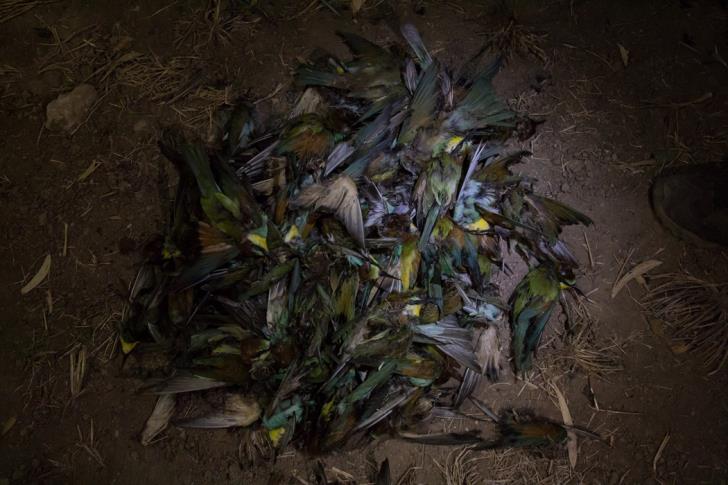
Images of dead protected species in Meneou area, Larnaca, were published on Facebook by BirdLife Cyprus and have caused anger and disgust, Philenews reported on Tuesday.

Dozens of European bee-eaters (Merops apiaster) but also other protected species such as Swallows (Hirundinidae) were shot to death one after the other last weekend in Meneou’s Lake Soros area, according to BirdLife Cyprus.

This area, the NGO also said, is an area active in illegal bird killing.

“Such incidents have been reported many a time in the past and they obviously still occur. The fact that some people continue to kill protected birds, for years now in this area and remain unpunished, reveals the gaps that exist in policing and law enforcement”, BirdLife Cyprus said.

The incident was reported to the competent authorities and the dead birds were handed over to Cyprus’ Game and Fauna Service.

CORONAVIRUS - HALF OF HOSPITALISATIONS ARE UNDER 45 YEARS OLD

CORONAVIRUS - HALF OF HOSPITALISATIONS ARE UNDER 45 YEARS OLD

 Cyprus Mail 29 September 2020 - by Evie Andreou

Amalia Hadjiyiannis

Half of the patients with coronavirus currently in hospital are under 45 years old including a 24-year-old, head of the head of the Famagusta hospital Amalia Hadjiyianni said on Tuesday, highlighting that younger people are not immune to the virus.

As of Tuesday morning, there were 16 patients at the Famagusta general hospital, four of them in the high dependency unit.

Hadjiyianni, who is the scientific director of the Famagusta hospital, which operates as the coronavirus reference hospital, said the rise of coronavirus cases and their hospitalisation is alarming since it means the spread of the virus is growing among the population.

She told the Cyprus News Agency that the average age of people treated at the Famagusta hospital, has decreased, since 50 per cent of patients are under 45 years old, including the 24-year-old.

“This sends the message that the coronavirus can infect any of us,” she said. “Everyone with no exception, regardless of age and health status, can develop coronavirus symptoms.”

Hadjiyianni expressed concerns over the double-digit number of Covid-19 patients admitted to the referral hospital which “takes us back to last April’s figures and shows an increase in the spread of the virus.”

She added that the increase in coronavirus cases and the hospitalisations should make the public more alert. She called for stricter adherence to all the protocols and rules issued by the health ministry and the epidemiological team.

Hadjiyianni said doctors at the referral hospital, after six months of treating coronavirus patients, are more experienced, wiser and are following the international guidelines. Likewise the nursing staff and together with the doctors they feel far more able deal with these cases, than when the pandemic started.

“The experience we all gained, doctors and nursing staff was quite good, so that today we can treat coronavirus patients from both the psychological and pharmaceutical aspects.”

The coronavirus patients are being treated in what are usually the gynaecology and paediatrics clinics of the hospital, she said. Patients of those two clinics are being treated by the hospital staff outside the hospital.

On the recent protests by some doctors, nursing and paramedical staff that Famagusta hospital is the Covid-19 reference hospital for the second time, Hadjiyianni said staff are afraid that this was stigmatising the hospital and could keep other patients away. But after “the superhuman efforts of the staff” people have returned to the hospital, she said.

“Patients visit the Famagusta general hospital because they have confidence in the doctors and the nursing staff,” Hadjiyianni said, adding that patients are not deterred because the hospital is a reference hospital.


NINE IN TEN RECOVERED COVID-19 PATIENTS EXPERIENCE SIDE-EFFECTS

NINE IN TEN RECOVERED COVID-19 PATIENTS EXPERIENCE SIDE-EFFECTS

 Cyprus Mail 29 September 2020 - by Reuters News Service


Nine in ten coronavirus patients reported experiencing side-effects such as fatigue, psychological after-effects and loss of smell and taste after they recovered from the disease, according to a preliminary study by South Korea.

The research comes as the global death toll from COVID-19 passed one million on Tuesday, a grim milestone in a pandemic that has devastated the global economy, overloaded health systems and changed the way people live.

In an online survey of 965 recovered COVID-19 patients, 879 people or 91.1% responded they were suffering at least one side-effect from the disease, the Korea Disease Control and Prevention Agency (KDCA) official Kwon Jun-wook told a briefing.

Fatigue was the most common side-effect with 26.2% reading, followed by difficulty in concentration which had 24.6%, Kwon said.

Other after-effects included psychological or mental side-effects and loss of taste or smell.

Kim Shin-woo, professor of internal medicine at Kyungpook National University School of Medicine in Daegu, sought comments from 5,762 recovered patients in South Korea and 16.7% of them participated in the survey, said Kwon.

While the research was done online for now, lead researcher Kim will soon publish the study with detailed analysis, he said.

South Korea is also conducting a separate study with some 16 medical organisations on potential complications of the disease through a detailed analysis involving CT scans on recovered patients next year, Kwon told the briefing.

The country reported 38 new infections by midnight on Monday, for a fifth day of double-digit increases, taking the national tally to 23,699 cases, with 407 deaths.


AVERAGE WAGES IN CYPRUS

AVERAGE WAGES IN CYPRUS

 Filenews 29 September 2020 - by Theano Thiopoulou


The most expensive occupations in Cyprus are those related to supporting mining activities and generally related to the mining and mining category. The lowest fees (€882 "unclean") are in agriculture, hunting and forestry and from then on there is a wide variety and pay gap by occupational category.

Analysis of data published yesterday by the Statistical Office shows the significant changes in the labour market in terms of pay in some occupations over the last decade. The highest paid occupation in Cyprus, until at least 2019, was support mining activities, with average monthly gross earnings being €8,669.

In 2010, pay for the same occupation was just 2,798, down 209% from 2019. But there are also occupations in the mining sector which have seen a sharp fall in pay.

For example, in 2010 the average monthly gross salary for crude oil and gas extraction was €11,348 and in 2019 it fell to €4,881. The mining sector also has high wages, with the average being €5,609.

Other professions

But it is interesting how much the other sectors of the economy offer as an average monthly fee. In the manufacturing sector, the highest average gross wage is the production of coke and products, with €4,281 followed by the production of tobacco products with €4,143.

In the other sectors: food industry €1,406, distillery €2,153, production of basic pharmaceuticals and preparations €2,246, leather and leather industry €1,426. The average monthly gross salary in the electricity, gas, steam and air conditioning sector is €2,815. In the field of water supply, wastewater treatment, waste management the average gross salary is €1,875. In the categories of professions below this section are: collection, treatment and water supply €2,321, sewage treatment €2,252.

In the construction sector, according to the Statistical Office, the average monthly gross salary is €1,563. In the subcategories, the average monthly gross salary for building construction is €1,668, civil engineering works €1,994. In wholesale and retail trade, repair of motor vehicles and motorcycles the average gross salary is €1,369, in wholesale trade excluding motor vehicle and motorcycle trade is €1,790, in retail trade €1,301.

In the field of transport and storage, the average monthly salary is €2,259. In the sub-categories, workers in land and pipeline transport have a salary of €1,624, in water transport the average salary is €2,428, in air transport €3,023, in storage and transport-support activities €2,562.

The hotel and catering sector offers a relatively low average gross salary of €1,299. For accommodations it is €1,406 and for catering activities €1,201. In the field of information and communication, the average gross salary is €2,651. In publishing activities €2,668, in the production of films, videos and television programmes €1,534, telecommunications €2,793, computer programming activities €2,774, information service activities €2,492.

Fees of banking, auditors

The average gross monthly salary in the financial and insurance sector is €3,425. The average monthly fee for financial services excluding insurance activities and pension funds is €3,555. In insurance, reinsurance and pension funds the average gross salary is €2,454 and the average remuneration in activities related to financial services and insurance activities is €3,581. The average gross salary for legal and accounting activities is €2,271, management consulting activities €2,857, architectural and engineering activities, €1,699, scientific research and development €2,807, advertising and market research €2,217, veterinary activities €1,269.

The average monthly gross salary for travel agency, tour operators and booking services is €1,716. In protection and research activities the average salary is €1,435, in the activities of providing services in buildings and outdoors is €1,142.

Public sector and education

In public administration and defence the average gross monthly salary is €2,792. In government the average salary is €2,899 and in education €1,965. In human health activities the average salary is €1,748, in home assistance activities €1,520, in social care activities without accommodation €1,226.

Fun and entertainment

The average salary for creative activities, arts and entertainment is €1,652, library, archive, museum and other cultural activities €1,331, gambling and betting €1,713, organisation activities €1,887, repair of computers and personal and household items €1,701 and other personal service activities €1,128.

 
HIGHER PENALTIES FOR TRAFFIC VIOLATIONS COME IN EFFECT FROM THURSDAY [1 October]

HIGHER PENALTIES FOR TRAFFIC VIOLATIONS COME IN EFFECT FROM THURSDAY [1 October]

 in-cyprus 29 September 2020 - by Maria Bitar


New, higher penalties for traffic violations in Cyprus come in effect on Thursday, October 1, and the police are calling for compliance.

The revised penalties aim to modernise existing legislation, improve road safety and make citizens comply with the country’s Traffic Code.

The new penalties concern traffic violations such as speeding, driving under the influence of alcohol or drugs, driving without a driver’s license or seat belt, driving a bike without a helmet, or insurance premium, etc.

Link to likely penalties [first page in Greek, second in English]


EU AND BRITAIN FAR APART AS KEY WEEK OF BREXIT TALKS BEGINS

EU AND BRITAIN FAR APART AS KEY WEEK OF BREXIT TALKS BEGINS

 Cyprus Mail 29 September 2020 - Reuters News Service


By Jan Strupczewski, John Chalmers and Elizabeth Piper

The European Union and Britain both said a post-Brexit deal was still some way off and differences persisted on Monday over putting in place their earlier divorce deal as they began a decisive week of talks in Brussels.

Britain left the EU last January and is locked in negotiations on a new trade deal from 2021, as well as on implementing the divorce, as set out in the Withdrawal Agreement, especially on the sensitive Irish border.

EU national leaders will assess the state of play at a summit next month, with a no-deal Brexit still possible.

Negotiations have stumbled over fisheries, fair competition and settling disputes, and Brexit descended into fresh chaos this month when London proposed draft laws that would undermine the earlier agreement.

“The UK’s positions are far apart from what the EU can accept, a deputy head of the bloc’s executive Commission, Maros Sefcovic, said on Monday after talks with Michael Gove, the minister handling the divorce deal.

“We maintain that the bill, if adopted in its current form, would constitute an extremely serious violation of … the Withdrawal Agreement and of international law,” he said, urging speedy progress before he meets Gove again in mid-October.

Gove said the clauses of the Internal Market Bill that undercut the Withdrawal Treaty would remain.

“We want to make sure that the Withdrawal Agreement is implemented in full,” Gove told reporters. “But those clauses are there, they’re in legislation … And those clauses will remain in that bill.”

TRADE TALKS

Prime Minister Boris Johnson’s spokesman said in London that Britain’s focus was on progress in trade talks.

“Although the last two weeks of informal talks have been relatively positive there remains much to be done,” he said.

“We simply want the standard free trade agreement … we continue to be asked to accept provisions that do not reflect the reality of our status as an independent country.”

Trade talks resume in Brussels on Tuesday. Lasting until Friday morning and also due to cover energy links and transport, they are the final round of negotiations scheduled so far.

EU leaders meeting in Brussels on Thursday and Friday are expected to authorise more talks before their next summit on Oct. 15-16. They will then assess whether to try push a deal over the line or prepare for the most damaging Brexit at the end of the year.

European Commission chief Ursula von der Leyen told reporters at a news conference in Lisbon late on Monday that a post-Brexit deal was still possible, saying the EU was “working hard” on it.

“Our economies, on both sides of the Channel, were severely hit by the pandemic and we should do everything possible to find an agreement that is manageable so we do not increase the negative impact on our economies,” she said.

The EU says negotiators must seal an agreement by the end of October or early November, to leave time for ratification by the European Parliament and some national parliaments in the EU so that it can take effect from 2021 when Britain’s standstill transition ends after Brexit.

Otherwise, the delicate peace on the island of Ireland as well as an estimated trillion euros worth of annual EU-UK trade would be at risk as the sides would fall back on general World Trade Organization rules that include tariffs and quotas.


FREDERICK RESEARCH CENTRE ANNOUNCES THE LAUNCH OF THE DEFEAT PROJECT

FREDERICK RESEARCH CENTRE ANNOUNCES THE LAUNCH OF THE DEFEAT PROJECT

 Cyprus Mail 29 September 2020 - Press Release


The DEFEAT project is funded by the Foundation for Research and Innovation (IDEK) under the Restart 2016 – 2020 programme to support research, technological development and innovation in Cyprus. The project team consists of research centres and universities both in Cyprus and abroad, companies, government agencies and representatives of directly interested parties and potential end users. The Frederick Research Centre is the contractor, while the coordinator and scientific manager of the project is Dimitris Nikolaides.

The general goal of the DEFEAT project is the conversion of waste from excavations, constructions and demolition into a new, innovative thermal insulation and fireproof material, which can be applied to building facades. At the present stage, the management of this waste in Cyprus seems to face several difficulties, due to the very small percentage of their recycling, but also the lack of suitable landfills. At the same time, there is a steady increase in the amount of such waste generated, which is due to the intense activity of the construction industry and reconstruction.

The DEFEAT project aims at the pilot development, through a thorough experimental study, of an innovative composite material from such waste, which will be characterised by low thermal conductivity, good mechanical properties and which at the same time will be resistant to fire exposure. The first critical technical problem to be addressed in the project is the optimisation of the waste separation process, in order to obtain “clean” materials that will be suitable for further recovery. For this purpose, a pioneering separation process will be implemented, based on the combination of image processing technologies, machine learning and robotics. The materials that will result from this innovative separation process will be used as a raw material for the development of the composite thermal and fireproof material, applying the geopolymerization technology. This material will be produced by two different methods: the conventional method of casting and the technology of 3D printing. Finally, an effort will be made by the public partners of the project to create an implementation framework for the utilization of this waste as a raw material in the construction industry.

BREAST OF FRIENDS EVENT LAUNCHES BREAST CANCER AWARENESS MONTH - Sponsored walk/run Saturday 3 October 4pm

BREAST OF FRIENDS EVENT LAUNCHES BREAST CANCER AWARENESS MONTH - Sponsored walk/run Saturday 3 October 4pm

 Cyprus Mail 29 September 2020 - by Bejay Browne


As Breast Cancer Awareness month gets underway, an initiative in Paphos is encouraging residents to take part in an upcoming sponsored walk/run to raise much needed funds.

The sponsored walk/run will take place on Saturday at 4pm, from Paphos castle to the Elysium hotel and back, chairman of the Breast of Friends, Marilyn McMillan said.

“The Breast of Friends is a breast cancer support group and three years ago, thanks to Sue Cordrey of the Paphos Running Group and their women’s group Sole Sisters, an idea was formed to establish an annual walk/run to raise funds for registered charities, the Paphos cancer patients support group and Pasykaf,” McMillan explained.

Breast Cancer Awareness Month is marked around the world in October, and aims to increase awareness and support of early detection and treatment, as well as palliative care.

The Breast of Friends support group was started five years ago by Maxine O’Daly and Cherrie Gregory.

The group aims to support breast cancer patients from discovery to recovery, she noted.

“Our members can offer their experience and knowledge about anything related to breast cancer and it’s a good opportunity to make new friends with people who have experiences or circumstances are similar,” McMillan said.

Breast cancer is the most common invasive cancer affecting women, and is responsible for 18.2 per cent of all cancer deaths worldwide. It is also the leading cancer in women in Cyprus, with approximately 400 new cases diagnosed annually.

Although McMillan has a background in nursing, she said that she found the process daunting when she was diagnosed.

“I didn’t know where to turn to, the hospital didn’t give patients any information, although this is getting better, and the problems can also be practical. I knew there were buses I could get for treatment in other towns for example, but I had no idea where they went from,” she said.

Last year the initiative raised €6,000 which funded a special bed for cancer patients to be used at a patients home, two oxygen machines, as well as arm (compression) sleeves used for Lymphedema.

In addition, O’Daly said a friend has set up a small initiative in Cyprus called Knitted Knockers, following her daughter’s breast cancer diagnosis.

“Knitted Knockers started in America and aims is to seek volunteers who knit for breast cancer survivors, hand made breast prosthesis for women who have undergone mastectomies or other procedures to the breast,” she said.

Special cotton is used which makes it much more comfortable when placed in a bra, O’Daly added.

Only 50 spaces are available at the weekend’s event due to Covid-19 restrictions, however if more people are interested there will be a staggered start.

Registration is at 3.30pm on Saturday October 3 at Paphos harbour, where everyone will be required to wear masks.


For more information: Breast of Friends: 99 056769, Paphos Running Group: 97 638375, Pasykaf Paphos: 26 222929, Cancer Patients support helpline: 97 760989. breastcancerpaphos.info